
We’ve noticed a pattern in who’s coming to us lately. It’s not businesses looking for someone to run their Facebook or Google ads a little better. It’s businesses that already have that covered, and want something the platforms can’t give them: a partner who can think.
Targeting used to be the edge
For a long time, knowing how to target was the skill. Building the right audience, layering the right signals, finding the segment nobody else had thought to bid on, that was genuinely hard, and genuinely valuable. An agency that was good at it could out-perform one that wasn’t, all else being equal.
All else is no longer equal, because the hard part isn’t hard anymore.
Then the machines got good at it
Every major platform now runs targeting through models that are better at finding your buyer than a human ever was. Feed them a goal and a budget, and they’ll find the audience faster and cheaper than a strategist could by hand. That used to take years of expertise to do well. Now it’s the default setting.
Which means targeting quality isn’t a competitive advantage anymore. It’s table stakes. Every agency with a media budget and an ad account has access to the same machine.
The algorithm can find your audience. It can’t make them care.
So what’s left to compete on
When everyone’s ad reaches the right person, the right person starts seeing a feed full of ads that all look and sound the same, because they were all built the same way, optimized against the same signals, chasing the same best practices. The businesses that break through that noise aren’t reaching a different audience. They’re saying something different to the same one.
That’s a creative call, not a targeting one. It’s the willingness to zig when the rest of the category is zagging: to take an angle nobody else in your space would risk, instead of the safe version of the same ad everyone’s already running.
- A media buyer optimizes the ad you already have.
- A creative partner questions whether it’s the right ad in the first place.
- One makes the machine work harder. The other gives the machine something worth showing.
What that looks like in practice
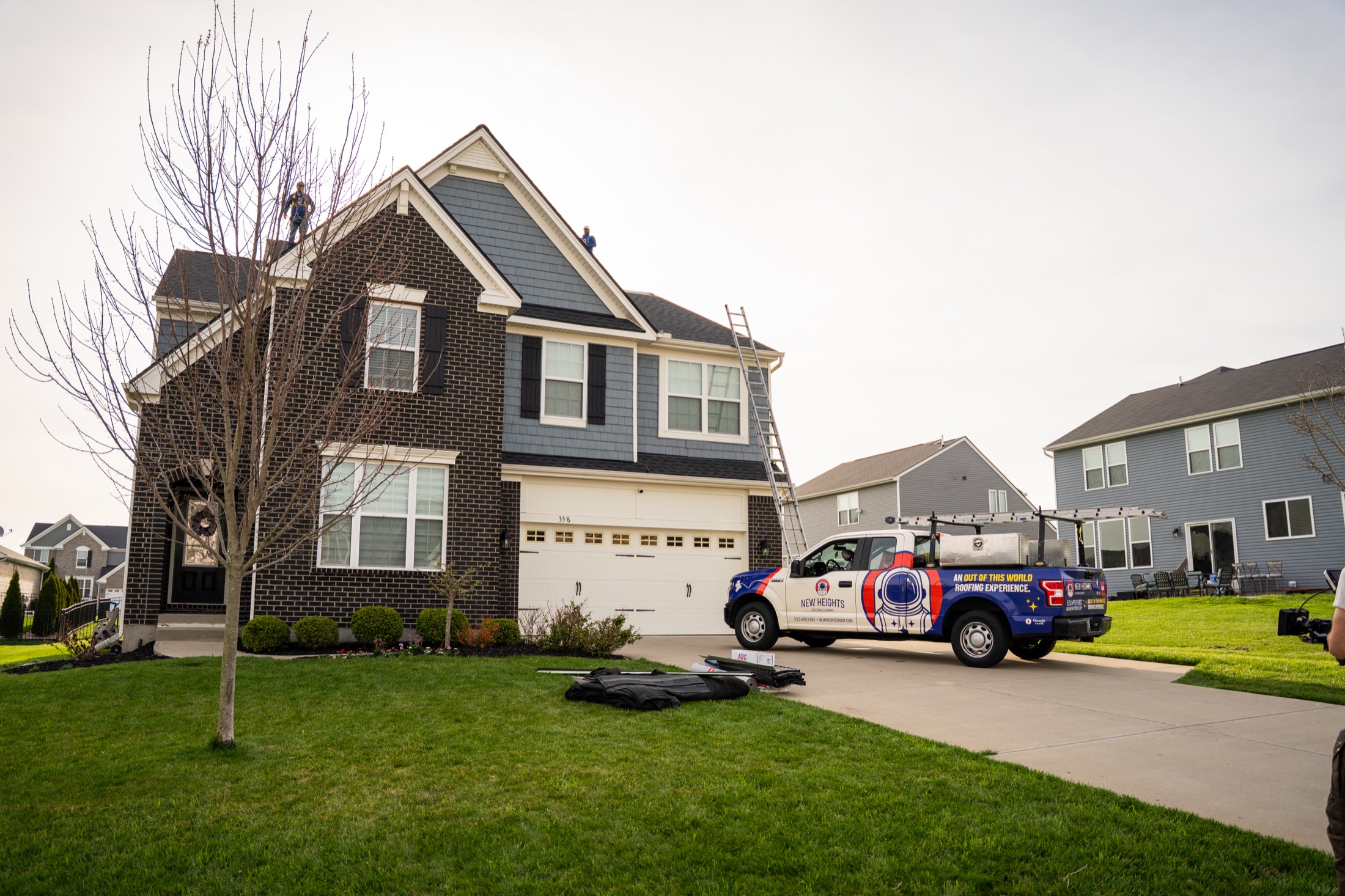
It’s why, when New Heights Roofing needed to own their busy season, we didn’t shoot the ad every roofer in their market already runs: a drone pass over a suburban house, a guy in a polo talking straight to camera, a phone number nobody remembers. We built a spot that plays the storm against the calm, weather gathering outside while a family stays warm and dry, never once thinking about the roof quietly doing its job, and lands every cut on two words: welcome home. No talking heads, no stock footage, nothing that looks like the wall of look-alike roofing ads it was built to stand out from. That’s the kind of idea that doesn’t come from an audience report. It comes from a team asking what would actually make someone stop scrolling past a roofing ad. See the case study.
We work across a wide range of brands for exactly this reason, from local crews like New Heights to companies with national reach, because a good creative idea doesn’t care what industry it came from. What it needs is a partner willing to have one.
The conversation we want to have
If your targeting is already dialed in and your results have started to flatten anyway, that’s usually not a signal to tighten the audience further. It’s a signal that the audience has seen this ad before, from someone else, built the exact same way. That’s the gap we’re built to close. Not by finding your customer better than the algorithm already does, but by giving them a reason to care once you’ve found them.